South Korean food exports surpassed $10 billion this year in 253 days, the fastest pace on record, powered by a ramyeon boom that has taken hold most strongly in the US, the Korea Agro-Fisheries & Food Trade Corp. (aT), said Monday.
Korea first hit the $10 billion mark in 2021, and has reached it faster each year since, with this year's milestone arriving 19 days ahead of last year's pace. Growth spanned established and emerging markets alike, along with processed foods and fresh produce, the state-run agency said.
The US remained the largest destination, with exports rising 12.9 percent to $1.81 billion from a year earlier, while exports to China grew 14 percent to $1.67 billion.
Demand also picked up in the Middle East and Europe, with sales to the United Arab Emirates jumping 49.9 percent to $331.7 million and exports to the Netherlands rising 14.4 percent to $229.6 million.
Instant noodles led growth by product, with exports rising 27.2 percent to $1.31 billion. Fresh fruit gained traction too, with strawberry exports up 15.5 percent to $61 million and grape exports climbing 64.6 percent to $45.2 million.
Among seafood products, seasoned seaweed, or gim, rose 8 percent to $462.7 million and oysters grew 8.2 percent to $65.6 million.
"Hitting $10 billion this early shows how far K-food's global standing has come," an aT official said. "The challenge now is converting first-time buyers into repeat customers who make these products part of their daily lives."
To keep export growth on track for the rest of the year, the Korean government and aT are pursuing a five-pronged strategy they call "Boost": bestselling items, overseas outreach, on-site marketing, support as one team and trade barrier-free.
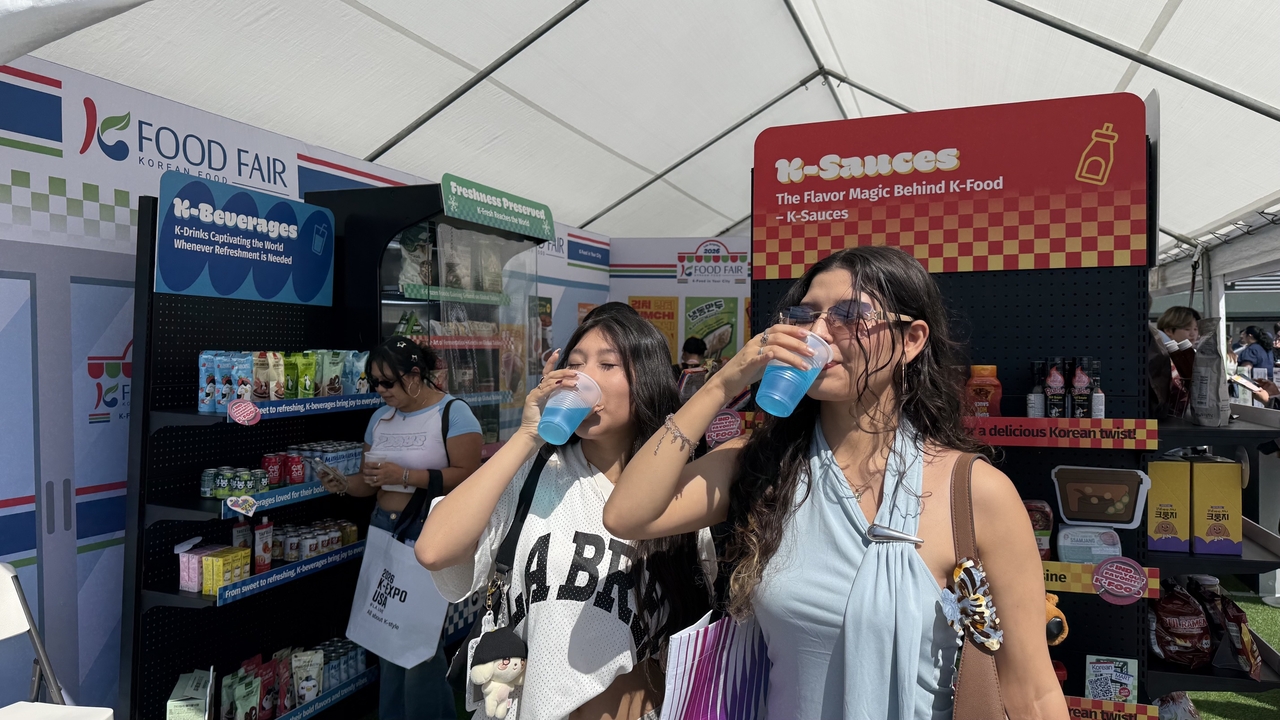
The agency plans regional marketing campaigns, including kimchi and Korean sauces in the US and halal products in Southeast Asia, alongside logistics upgrades in Vietnam, Latin America and the Middle East. It is also coordinating a 15-agency support hub to help exporters navigate rising nontariff barriers, such as the EU's packaging regulations and Indonesia's halal certification requirements.
minmin@heraldcorp.com